Stop Renting Courts. Start Selling Experiences.
How social pickleball games can double gross revenue per court hour in Saigon
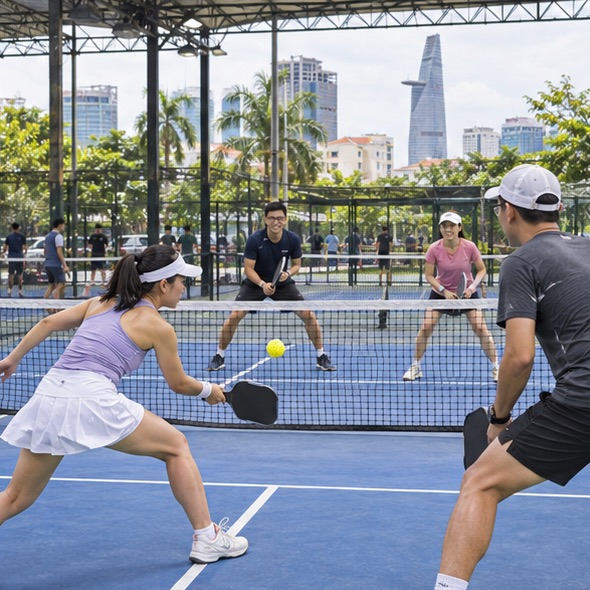
A two-hour court booking in Ho Chi Minh City might bring in 400,000 VND. Fill the same slot with eight players paying 100,000 VND each for an organized social game, and it brings in 800,000 VND before costs. Here’s how club owners can test that model, from the first mixer to a weekly calendar.
1. Sell individual spots
Traditional rentals leave customers to find partners, coordinate schedules and split the bill. For a social pickleball session, players register individually and the club handles check-in, matching, rotations and timing. Solo players can show up ready to play, meet new partners and face different opponents.
2. Compare the economics of one court
Use 200,000 VND per court hour as an illustrative rental rate. In a two-hour doubles rental, four players split 400,000 VND. In an eight-player social, each pays the same 100,000 VND and shares court time on rotation. Publish the player cap and rotation rules before people pay so they know what experience they’re buying.
| Two hours, one court | Rental | Social game |
|---|---|---|
| Paying players | 4 | 8 |
| Per player | 100,000 VND | 100,000 VND |
| Gross revenue | 400,000 VND | 800,000 VND |
| Per court hour | 200,000 VND | 400,000 VND |
3. Seven social pickleball formats to try
Pickleball Mixer
Rotate partners and opponents on a timer. A good entry point for solo players and newcomers to the club.
King of the Court
Across several courts, winners move up and losing teams move down. The ladder encourages friendly rivalries and regular participation.
Friday Night Pickleball
Pair organized games with music and refreshments. Give regulars a weekly evening out and test food and drink sales.
Beginner Social
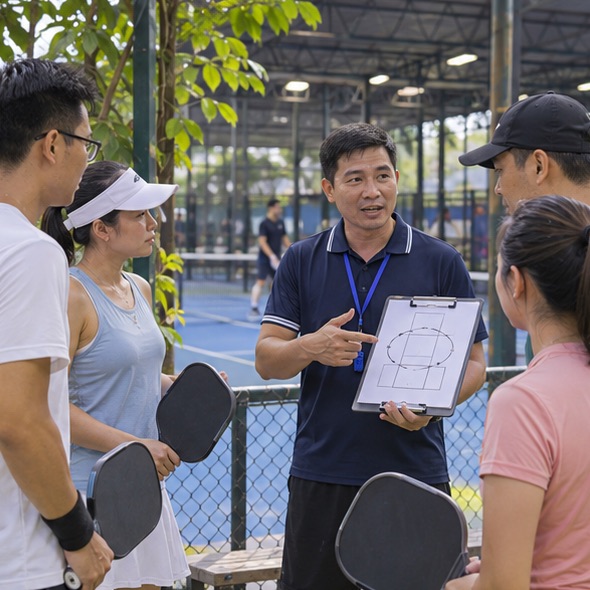
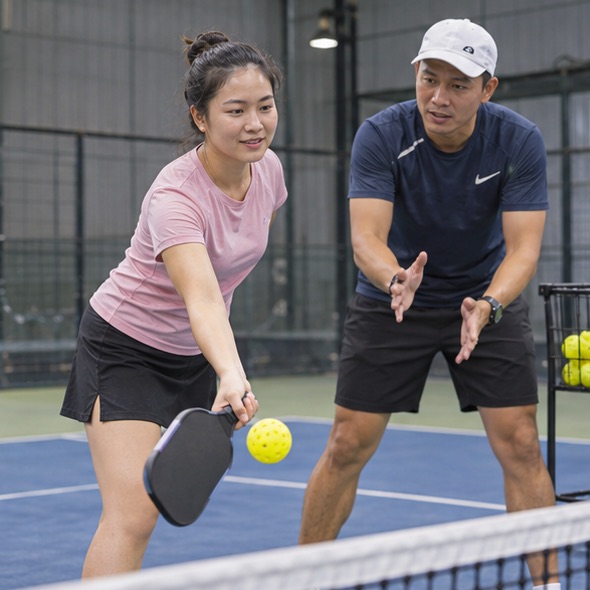
Start with a short lesson and move into guided play. Offer loaner paddles or bundle equipment rental into the ticket.
Blind Partner Tournament
Accept individual registrations and assign partners by draw. Players can enter without bringing a teammate.
Pickleball & Coffee
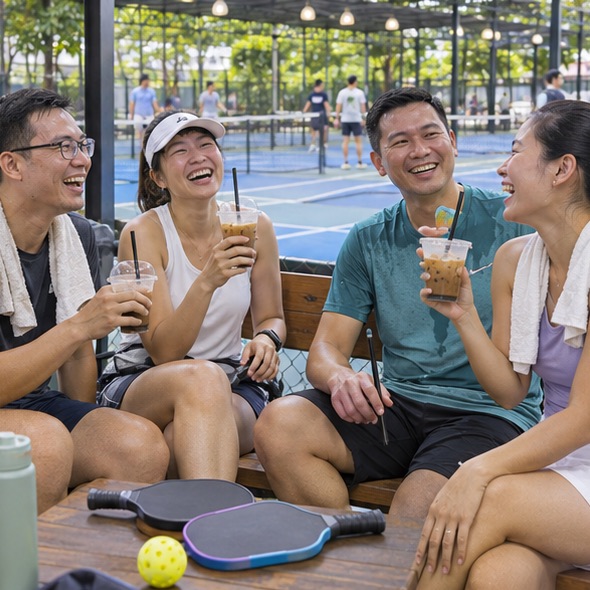
Follow a morning mixer with coffee. Test it during a quiet slot when players with flexible schedules can attend.
Corporate Pickleball Mixer
Sell companies a hosted package with instruction, games and team challenges. Quote it by group size and staffing needs.
4. Start with quiet hours in Ho Chi Minh City
Check booking records for the times your venue struggles to fill. A club in Thảo Điền might test a weekday morning coffee mixer. A club in Bình Thạnh or the former District 9 might test an afternoon beginner session. Choose the hours using your own booking history.
| Day | Time | Event |
|---|---|---|
| Monday | 10:00–12:00 | Pickleball & Coffee |
| Tuesday | 14:00–16:00 | Beginner Social |
| Wednesday | 19:00–21:00 | King of the Court |
| Thursday | 14:00–16:00 | Pickleball Mixer |
| Friday | 19:00–21:00 | Friday Night Pickleball |
| Saturday | 16:00–18:00 | Blind Partner Tournament |
| Sunday | 09:00–11:00 | Family Pickleball |
Use the calendar as a menu of formats. Move into peak hours once expected event contribution exceeds the contribution from ordinary rentals in that slot.
5. Forecast monthly revenue and set a break-even target
At five two-hour sessions per week with two courts and 16 paid spots per event, gross event revenue reaches 32,000,000 VND over four weeks at full capacity. The same 80 court hours at 200,000 VND generate 16,000,000 VND if every hour sells as a rental. The annual gross difference is 208,000,000 VND over 52 weeks.
| Measure | Amount |
|---|---|
| Gross revenue per event | 1,600,000 VND |
| Weekly event revenue | 8,000,000 VND |
| Four-week event revenue | 32,000,000 VND |
| Four-week rental baseline at full occupancy | 16,000,000 VND |
| Additional gross revenue over four weeks | 16,000,000 VND |
| Additional gross revenue over 52 weeks | 208,000,000 VND |
On one court, four tickets at 100,000 VND match the 400,000 VND gross rental benchmark. With 200,000 VND in extra hosting costs and no other incremental costs, six tickets match the rental’s contribution. Include processing fees, supplies and prizes in your own calculation. For quiet slots, compare against the revenue you actually expect to earn.
6. Earn more beyond the ticket
Track coffee and refreshments, paddle rental, merchandise and referrals to private coaching. Regulars may go on to buy memberships, enter tournaments or bring a company group. A recurring event can also give local sponsors a predictable audience.
7. Build a reason for players to return
Give each session a consistent time, an approachable host and clear skill-level expectations. When people recognize each other and invite friends, the event becomes part of their week. Track how many first-time attendees return within 30 days.
8. Make registration easy
Publish the format, skill level, price, remaining spots and cancellation terms on your club website. Let players book one spot, pay or leave a deposit, receive reminders and join a waitlist when full. Share the direct registration link in Zalo groups and on your club’s social pages.
9. Test two sessions before expanding
Start with one beginner social and one intermediate mixer per week. For each, record paid attendance, gross revenue per court hour, hosting costs, additional sales, participant feedback and repeat visits. Adjust price, headcount or rotation length based on what players value and what the session earns.
